Production AI · Worldwide deployments

AI systems that hold up in surgery, court, and the open sea.

CoreLink AI designs, builds, and deploys machine-learning systems where failure isn't an option — edge-deployed surgical segmentation, lawyer-grade legal analysis, real-time maritime forecasting, and precision-health risk scoring. Not prototypes. Not demos. Production systems, in operating theatres and law firms, running today.

10+
Production AI systems deployed
15+
Years building ML in industry
10+
Peer-reviewed publications
10
Countries where clients operate
Clients operate in
  • United Kingdom
  • United States
  • Canada
  • Australia
  • Germany
  • Italy
  • Norway
  • Japan
  • Singapore
  • China
§ About

We build the AI systems other consultancies stop short of.

Most AI consulting ends at the demo — a notebook, a proof of concept, a slide deck claiming 'production ready'. We specialise in the part after that: real-time edge deployment on constrained hardware, regulatory compliance in healthcare and legal contexts, multi-source data fusion at operational scale, and the production engineering required to put a model in front of a surgeon or a partner at a law firm.

Led by Dr. Musa Abdulkareem — with 15+ years of production ML across healthcare, legal, maritime, and industrial domains, and 10+ peer-reviewed publications — CoreLink AI partners with organisations across ten countries that need AI to work when it counts, not just when it's demoed.

01
Regulated-industry fluency
Clinical data governance, PIPEDA and GDPR compliance, audit trails, and the engineering rigor required to deploy in healthcare and legal settings.
02
Edge & real-time systems
Sub-100ms inference on embedded hardware (Nvidia Jetson, TensorRT, CUDA), not cloud APIs with unpredictable latency.
03
Multi-source data fusion
Heterogeneous time-series alignment, ensemble forecasting, probabilistic outputs — not point-estimate ML.
04
Production deployment
Full pipeline from training through quantisation, optimisation, deployment, monitoring, and continuous improvement.
§ Selected work

Production systems. Real clients. Measured outcomes.

§ 01
Clinical / Computer Vision
Client — US Hospital (Confidential)

Real-time surgical segmentation on edge hardware

Intraoperative AI that delineates vascular structures live during surgery, running on an Nvidia Jetson inside the operating theatre.

The challenge

Surgeons operating near major vessels need precise, low-latency visualisation of veins and arteries from ultrasound — imagery that is inherently noisy, low-contrast, and highly variable across patients. Any perceptible delay or cloud-connectivity failure renders the tool unusable in a live procedural context.

Technical scope

  • Deep learning segmentation trained on annotated intraoperative ultrasound datasets.
  • Architecture balanced for sub-100ms inference on edge hardware without sacrificing segmentation fidelity.
  • Advanced preprocessing: speckle reduction, signal normalisation, contrast enhancement tuned for intraoperative noise.
  • Full deployment pipeline from training through quantisation and TensorRT optimisation on Nvidia Jetson.
  • Robust fallback behaviour engineered for the thermal, power, and reliability constraints of a theatre.

Impact

  • Deployed and used in live surgical procedures at a US hospital.
  • Demonstrated that edge-deployed deep learning can meet the latency and reliability bar of live surgery.
  • Extensible architecture ready for additional intraoperative imaging applications.
Technologies
PyTorchU-NetTensorRTNvidia JetsonCUDAUltrasound image processing

§ 02
Precision health / Biomarker analytics
Client — InnerMe

Biomarker risk scoring platform

Transforms raw blood panels into multi-dimensional health risk profiles across 27 health dimensions — from 118 individual biomarkers.

The challenge

Standard blood results present biomarkers in isolation with binary normal/abnormal flags, missing the complex interactions between markers that collectively signal systemic risk. Capturing those interactions clinically and translating them into interpretable, actionable output requires far more than a reference-range lookup.

Technical scope

  • Risk scoring across 27 health dimensions — cardiovascular, metabolic, hormonal, hepatic, renal, thyroid, immune, nutritional, and more — from 118 biomarkers.
  • Algorithms grounded in clinical reference ranges, peer-reviewed literature, and functional medicine thresholds; graduated rather than binary.
  • Multi-biomarker interaction models that reflect how markers compound, not just where each sits individually.
  • Modular architecture so new biomarkers and dimensions can be added without re-engineering the scoring core.
  • Validation frameworks benchmarking scores against established clinical calculators and epidemiological data.

Impact

  • Delivers multi-dimensional health intelligence from a single standard blood draw.
  • Enables practitioners and users to surface early warning signals across 27 dimensions simultaneously.
  • Modular design supports ongoing expansion as new biomarker-disease associations are published.
Technologies
PythonStatistical modellingClinical biomarker analysisMulti-variable interaction modellingModular architecture
§ 03
Legal AI / NLP
Client — Canadian Law Firm (Confidential)

Lawyer-grade legal case analysis system

Goes beyond retrieval: performs substantive legal reasoning on Canadian case law, delivering structured analysis practising lawyers integrate into their workflow.

§ 04
Legal AI / Document intelligence
Client — Multiple law firms

AI contract analysis & document intelligence

Transforms manual contract review into an AI-assisted workflow — 70% efficiency gains measured in production.

The challenge

Firms review thousands of contracts — commercial agreements, leases, NDAs, vendor contracts — across wildly variable formats and drafting conventions. Manual review is slow, inconsistent between reviewers, and disproportionately spends senior time on routine provisions rather than high-risk clauses.

Technical scope

  • AI parsing, clause identification, and classification across diverse contract types and formats.
  • Obligation extraction — commitments, deadlines, payment terms, termination, liability caps, indemnification.
  • Risk flagging for non-standard clauses and deviations from template agreements.
  • High-volume batch processing with consistent analytical standards across every document.
  • Integration into existing legal workflows and document management systems.

Impact

  • 70% efficiency gain in contract review workflows — measured in production.
  • Consistent analytical standards across every document, eliminating reviewer-to-reviewer variance.
  • Senior legal attention redirected from routine review to high-risk clauses and strategic work.
Technologies
NLPDocument parsingContract analyticsMachine learning classificationPython
§ 05
Voice biomarkers / Health AI
Client — Confidential

Stuttering detection & speech-biomarker AI

Detects and classifies blocks, repetitions, and prolongations from raw audio — a production-grade template for the voice-to-health pipeline.

The challenge

Stuttering manifests through multiple distinct disfluency types that vary enormously between individuals and contexts. Distinguishing genuine disfluency events from the normal hesitations present in all speech requires acoustic analysis at every moment plus a model of how speech flows, pauses, and disrupts across an utterance.

Technical scope

  • Multi-level acoustic feature extraction: MFCCs (13 + delta + delta-delta), spectral centroid, rolloff, flux, zero-crossing rate.
  • Voice-quality features: jitter (local, RAP), shimmer (local, APQ), harmonic-to-noise ratio — reflecting vocal-fold neuromuscular control.
  • Formant features: F1, F2, F3 frequencies and bandwidths for articulatory precision.
  • Temporal and prosodic features: speech-rate variability, pause distributions, voiced/unvoiced ratios, syllable-timing irregularity.
  • Hybrid architecture: 1D CNNs on mel-spectrograms for frame-level detection, BiLSTM for utterance-level dynamics, XGBoost on handcrafted features for interpretability.

Impact

  • Detects and classifies multiple stuttering event types from raw audio with high accuracy.
  • Demonstrated the viability of extracting clinically meaningful biomarkers from voice.
  • Pipeline directly transferable to fatigue, cognitive-load, stress, and neurological screening applications.
Technologies
PyTorchlibrosaMFCCsMel-spectrograms1D CNNsBiLSTMXGBoostVAD
§ 06
Maritime AI / Operations research
Client — Maritime Industry Client (Confidential)

Ship fuel optimisation — port selection ML

Replaces price-only bunker decisions with energy-content-optimised procurement, delivering measurable fleet-wide cost reduction.

The challenge

Bunker fuel sold at the same price per tonne can deliver meaningfully different usable energy depending on source, refinery, and grade. Operators traditionally bunker on price and convenience alone — missing the optimisation available once fuel energy content, route efficiency, and procurement cost are jointly modelled.

Technical scope

  • ML models predicting fuel energy content across ports, suppliers, and grades, trained on historical quality and laboratory data.
  • Multi-variable optimisation integrating predictions with procurement cost, route planning, port availability, and scheduling constraints.
  • Feature pipelines incorporating supplier quality history, seasonal variation, and regional supply characteristics.
  • Fleet-level decision-support with quantified cost-benefit analysis per bunkering option.
  • Continuous improvement loop incorporating new laboratory analysis of purchased fuel.

Impact

  • Data-driven port selection replaces heuristic and price-only decisions.
  • Measurable fuel cost savings across the fleet.
  • Fleet managers gain quantified, comparable analysis of bunkering options for the first time.
Technologies
Machine learningMulti-variable optimisationPredictive modellingPythonData engineering
§ 07
Geospatial AI / Oceanographic prediction
Client — Confidential

Marine location prediction — Gulf of Mexico

Six-hour-ahead positional forecasts for marine assets, fusing weather, oceanographic, and wave data with behavioural history.

The challenge

The Gulf of Mexico is one of the most operationally active marine environments in the world. Position forecasting there requires fusing ocean currents that shift with depth and season, rapidly changing wind, wave action affecting drift, and asset behaviour itself. Simple extrapolation from current heading is insufficient; environmental forces routinely cause significant deviation.

Technical scope

  • Predictive models fusing weather (wind speed, direction, trajectories), oceanographic (currents at depth, SST), wave (Hs, period, direction, swell), and historical trajectory data.
  • Feature pipelines synchronising heterogeneous time-series across different resolutions, granularities, and providers.
  • Ensemble approaches capturing the differing timescales of weather-driven drift, current displacement, and operational manoeuvring.
  • Probabilistic outputs: confidence envelopes rather than point estimates, reflecting the inherent uncertainty of weather-dependent forecasts.
  • Real-time data ingestion and continuous model update as new observations arrive.

Impact

  • Six-hour-ahead location predictions with accuracy sufficient for operational decision-making.
  • Supports planning, safety management, and resource allocation for offshore marine operations.
  • Probabilistic forecasts let operators assess risk and plan contingencies by confidence level.
Technologies
Machine learningTime-series forecastingEnsemble methodsGeospatial processingProbabilistic modellingPython
§ 08
Carbon-border compliance / Regulated computation
Client — Carbon Compliance Platform (Confidential)

Verifier-ready CBAM embedded-emissions engine

Turns an industrial producer's activity data into a deterministic, reproducible-to-the-decimal CBAM emissions figure a regulator's verifier can independently re-run — with a segregated AI explainer that can never touch the number.

The challenge

Under the EU's Carbon Border Adjustment Mechanism, importers need a defensible embedded-emissions figure for every good — steel, cement, aluminium, fertilisers, hydrogen. Reporting tools help assemble a submission, but the figure inside it stays the producer's problem, and it has to survive a verifier who re-checks every number. Doing this with AI raises a sharper problem still: how do you use a language model anywhere near a regulated computation without it silently altering the answer?

Technical scope

  • Deterministic computation engine pinned to versioned rule packs and engine builds — identical inputs reproduce the identical figure, byte-for-byte, on every run.
  • Per-sector methodologies (steel, cement, aluminium, fertilisers, hydrogen) whose calculation method and route treatment are independently assessed and signed by a sector expert, with factor values authored from cited sources under immutable, version-locked retention.
  • A factor cascade and on-site carbon mass balance that trace each figure to its contributing activities, the value selected at each step, and the regulation that value cites.
  • A hash-chained audit trail: every figure traces to the exact rule pack and engine build that produced it, and the chain can be independently recomputed by a verifier.
  • A strictly segregated LLM explainer that describes a finished, immutable result in plain language and quotes every quantity verbatim — sharing no code path with the engine, so it cannot alter a value even in principle.

Impact

  • Produces a single embedded-emissions figure per good that a producer can stand behind before a regulator and a verifier can reproduce exactly.
  • Guarantees by construction — not by promise — that the AI never touches the regulated number: turn the explainer off and the figure, audit trail, and reproducibility are unchanged.
  • Refuses to manufacture a figure where the inputs can't support one — flagging or scoping it out rather than guessing — with independent, scoped, logged ways for verifiers to re-check every result.
Technologies
Deterministic computation engineVersioned rule packsHash-chained audit trailCarbon mass-balance modellingSegregated LLM explainerReproducibility testing
§ Team

Led by researchers who deploy.

Dr. Musa Abdulkareem
Director of AI & Data Science

Dr. Musa Abdulkareem

PhD · 15+ years in production ML · 10+ peer-reviewed publications

Leads architecture and delivery of CoreLink AI's production systems across healthcare, legal, maritime, and industrial domains. Published researcher in deep learning, medical imaging, and signal processing; experienced across the full lifecycle from model development through edge deployment.

View on LinkedIn →
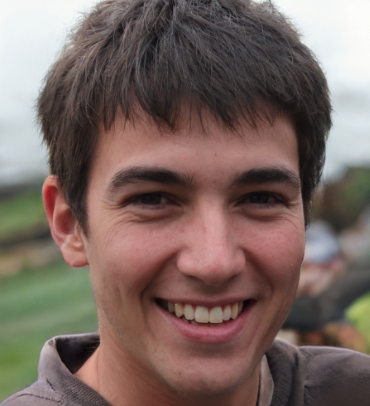
Mark Thompson
Solution Architect

Mark Thompson

Leads the design and development of custom AI and machine learning solutions, ensuring they meet the unique needs of each client.

John Walker
Senior Designer

John Walker

Responsible for data governance, strategy, and ensuring the quality and security of data.

Adam Williams
Lead Machine Learning Engineer

Adam Williams

Specialises in designing and developing machine learning models, driving innovation in AI-powered solutions.

§ Start a conversation

Tell us what you're trying to build.

We respond to every serious inquiry within two business days. For confidential discussions, email directly — the form is fine for initial scoping.